Dental 3D Printing Applications
Clear Aligner Models
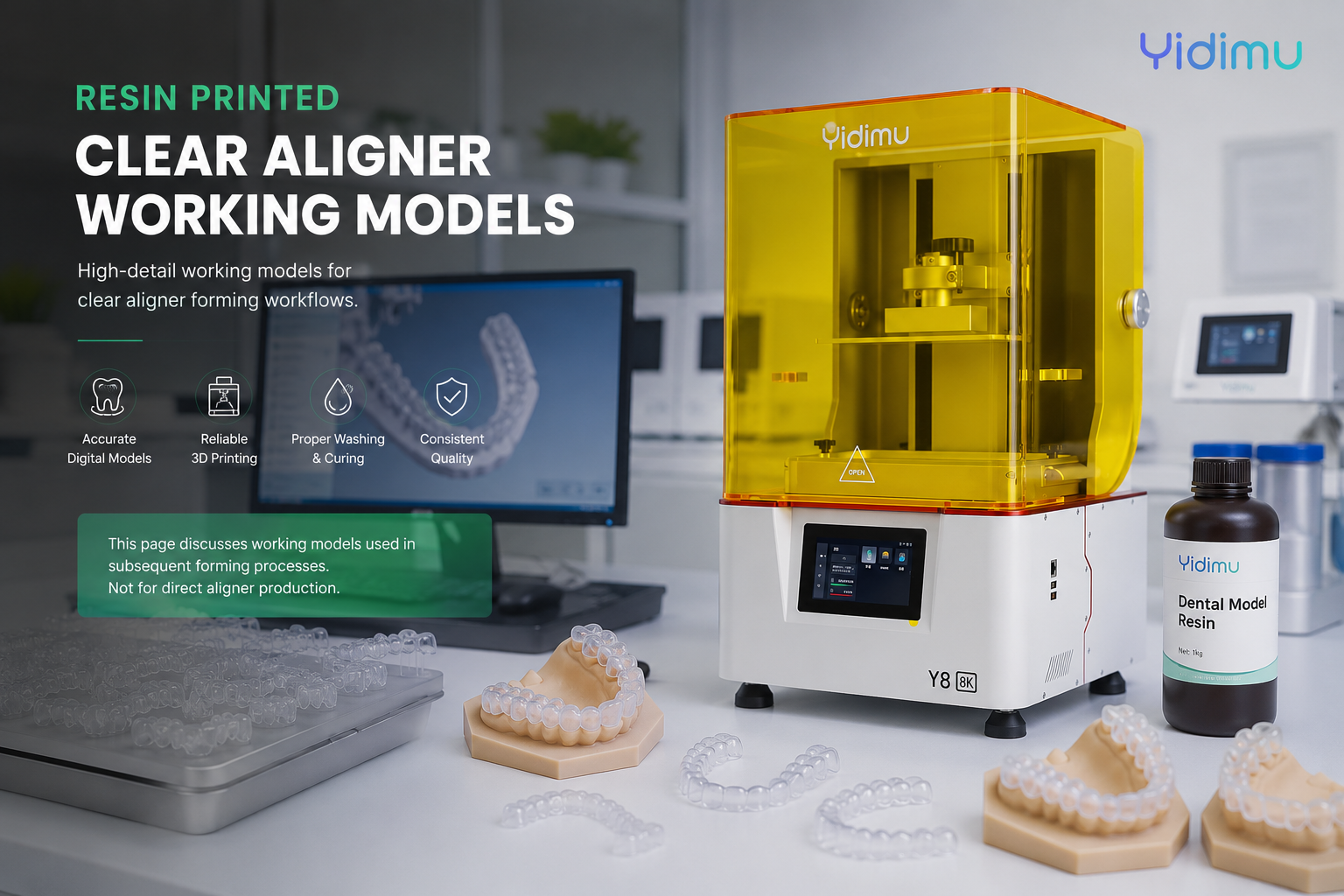
3D printed working models prepared for a subsequent clear aligner forming workflow. Evaluate model preparation, layout, printing, washing, post-curing, inspection, and sample validation as one controlled process.
Defined Application Scope
Working Models, Not Final Aligners
In a model-based workflow, the printer produces a physical dental model representing an approved digital stage. A separate forming process creates the aligner over that model.
The printer, model resin, washing procedure, curing equipment, model geometry, and inspection method should be evaluated together. A model material should not be treated as an intraoral aligner material unless the corresponding product documentation specifically supports that intended use.
Clinical planning and final-use decisions remain the responsibility of qualified dental professionals.
Model Production Workflow
From Digital Stage to Validated Model
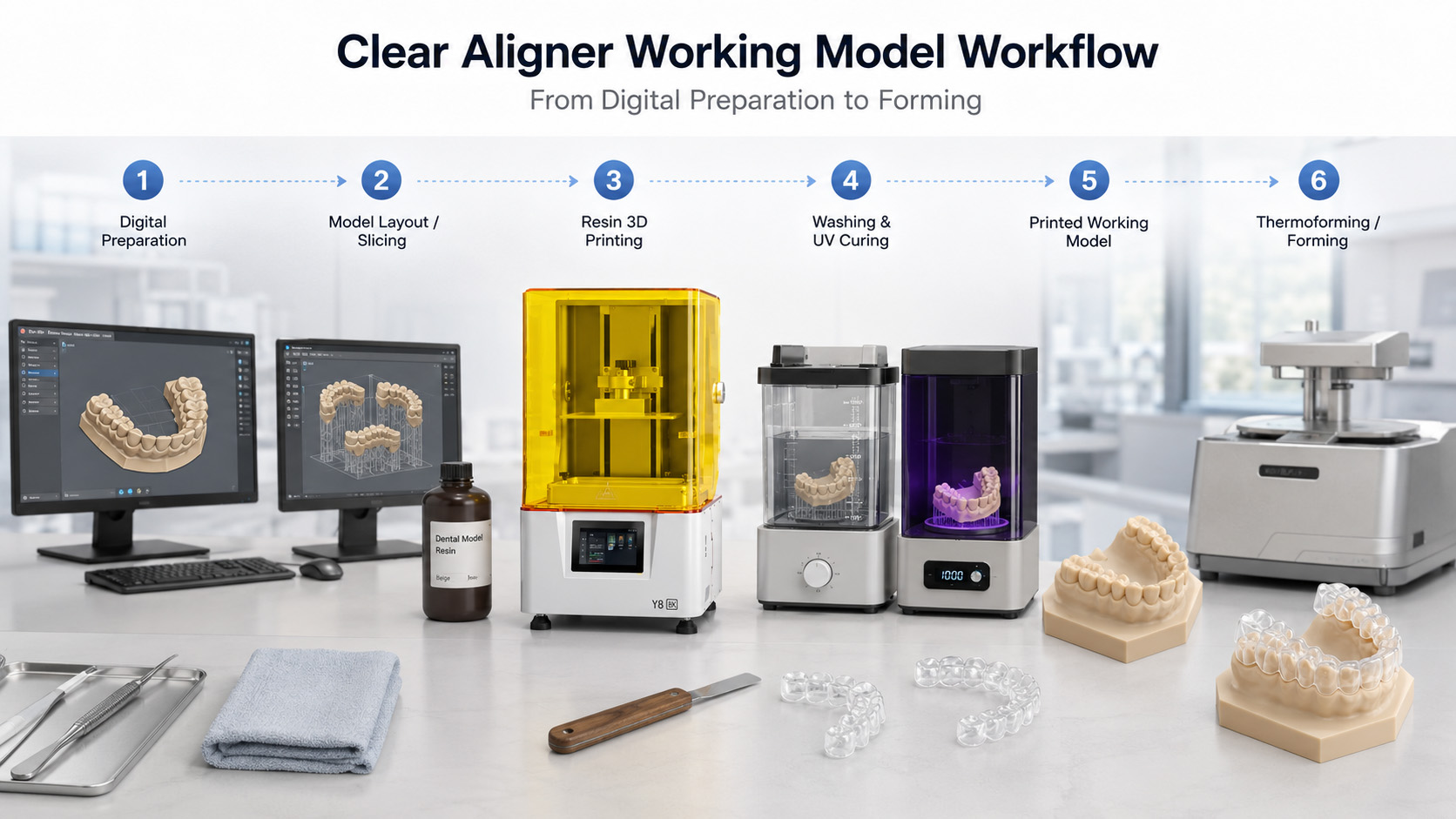
Each production step can affect the surface and dimensions of the working model. Establish a documented workflow before using the models for routine forming.
Prepare the Digital Model
Review the mesh, model base, wall structure, labels, and required forming area before slicing.
Arrange the Build
Select orientation, spacing, and support placement according to the printer, resin, model design, and inspection requirements.
Match Printer and Resin
Confirm wavelength, equipment compatibility, exposure profile, model geometry, and current technical documentation.
Wash and Dry
Remove uncured resin according to the applicable TDS, SDS, and laboratory procedure, then dry the model before post-curing.
Post-Cure the Model
Use a validated curing procedure based on the material, model size, wall thickness, equipment, and required application.
Inspect and Validate
Check surface quality, critical dimensions, model stability, forming results, and repeatability before routine production.
Sample Validation
What to Check Before Production
Validate the complete workflow with representative model files and the intended forming process rather than relying only on the appearance of a single print.
Surface Quality
Review layer artifacts, support marks, residual resin, local defects, and surfaces used during forming.
Critical Dimensions
Define the dimensions and inspection method that matter to the laboratory’s approved production procedure.
Forming Result
Evaluate how the processed working model performs with the selected sheet, forming equipment, and trimming process.
Repeatability
Compare multiple models and production runs before establishing an internal operating procedure.
Final material use must follow the applicable TDS, SDS, IFU, compatible equipment information, validated post-processing requirements, and local regulations. A dental technician, dentist, or other qualified professional must confirm the specific clinical use. Model-printing materials must not be presented as final intraoral device materials without matching formal documentation.
Frequently Asked Questions
Clear Aligner Model Questions
Are the printed models the final clear aligners?
No. This page covers working models used in a subsequent forming workflow. The finished aligner is a separate product produced through the laboratory’s approved process.
Can any dental resin be used for aligner models?
No universal resin recommendation applies to every printer or workflow. Confirm printer compatibility, model requirements, technical documentation, washing, curing, and forming performance before use.
How long should the models be washed and cured?
Processing time depends on the resin, model geometry, wall thickness, printer, washing method, curing equipment, and application requirements. Follow the current product documentation and a validated laboratory procedure.
What information is needed for sample evaluation?
Provide a representative model file, overall dimensions, expected quantity, forming method, preferred material, surface requirements, critical inspection areas, and any existing post-processing procedure.
Evaluate a Clear Aligner Working Model
Send the model dimensions, intended forming workflow, required quantity, material preference, surface requirements, and inspection method. Yidimu can review the information for equipment, material, and sample-printing evaluation.