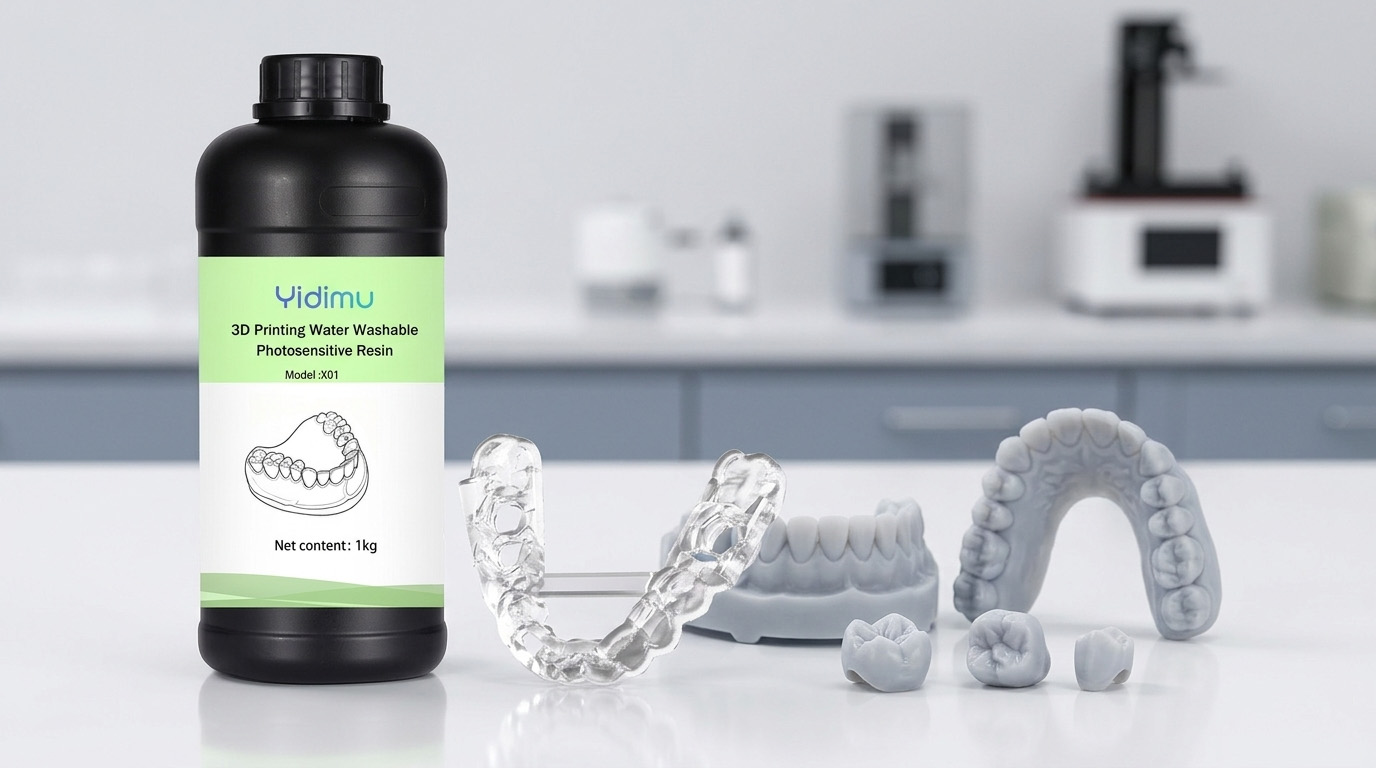
Dental model material
Water-Washable Dental Model Resin
A photopolymer resin option for producing dental working models with a water-based cleaning stage, followed by controlled drying, UV post-curing and laboratory inspection.
Material position
Designed for model workflows, not unrestricted dental use
The material should be selected according to the model type, printer, validated resin profile, post-processing method and required laboratory result.
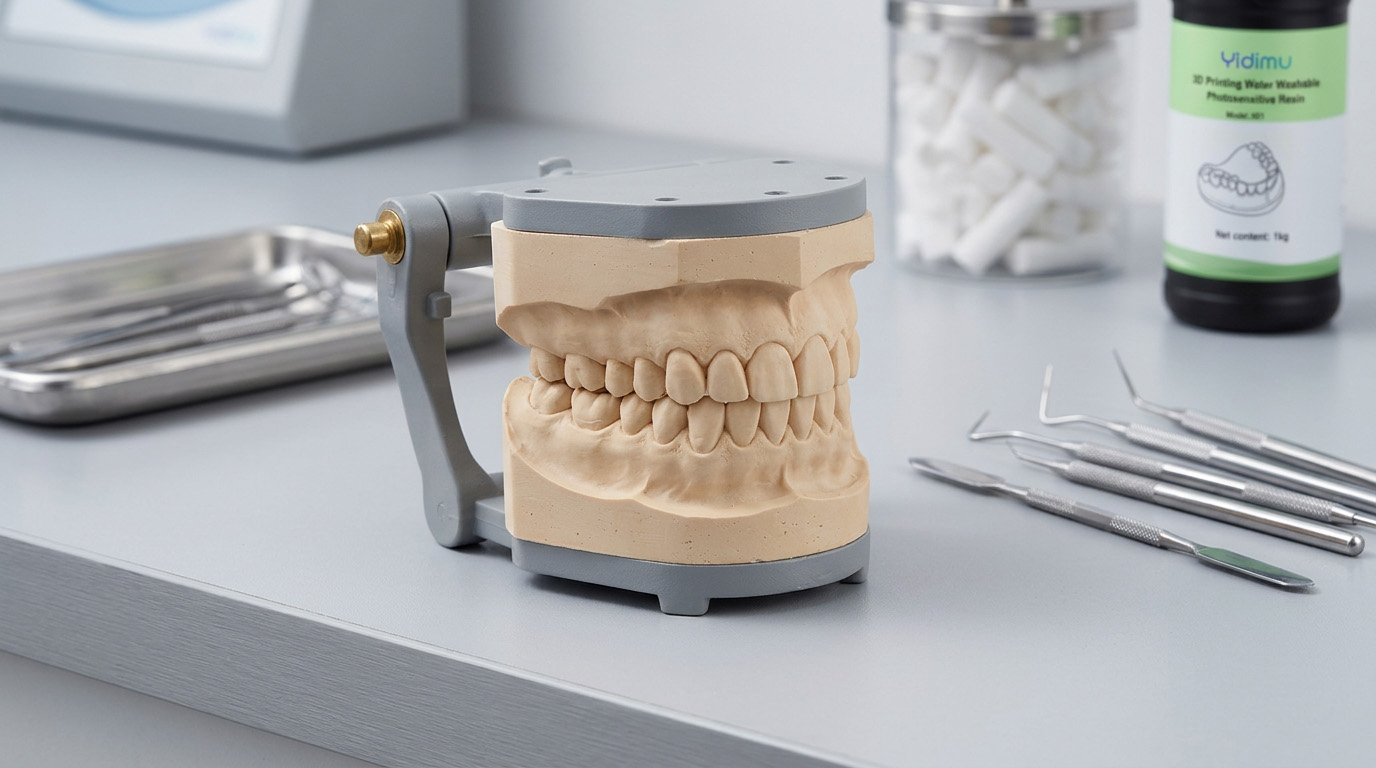
Dental working models
Intended for model-based laboratory workflows that require visible anatomical details and a surface suitable for inspection after printing and post-processing.
Crown and bridge models
May be evaluated for printed working models used during crown and bridge design, fitting or laboratory process verification.
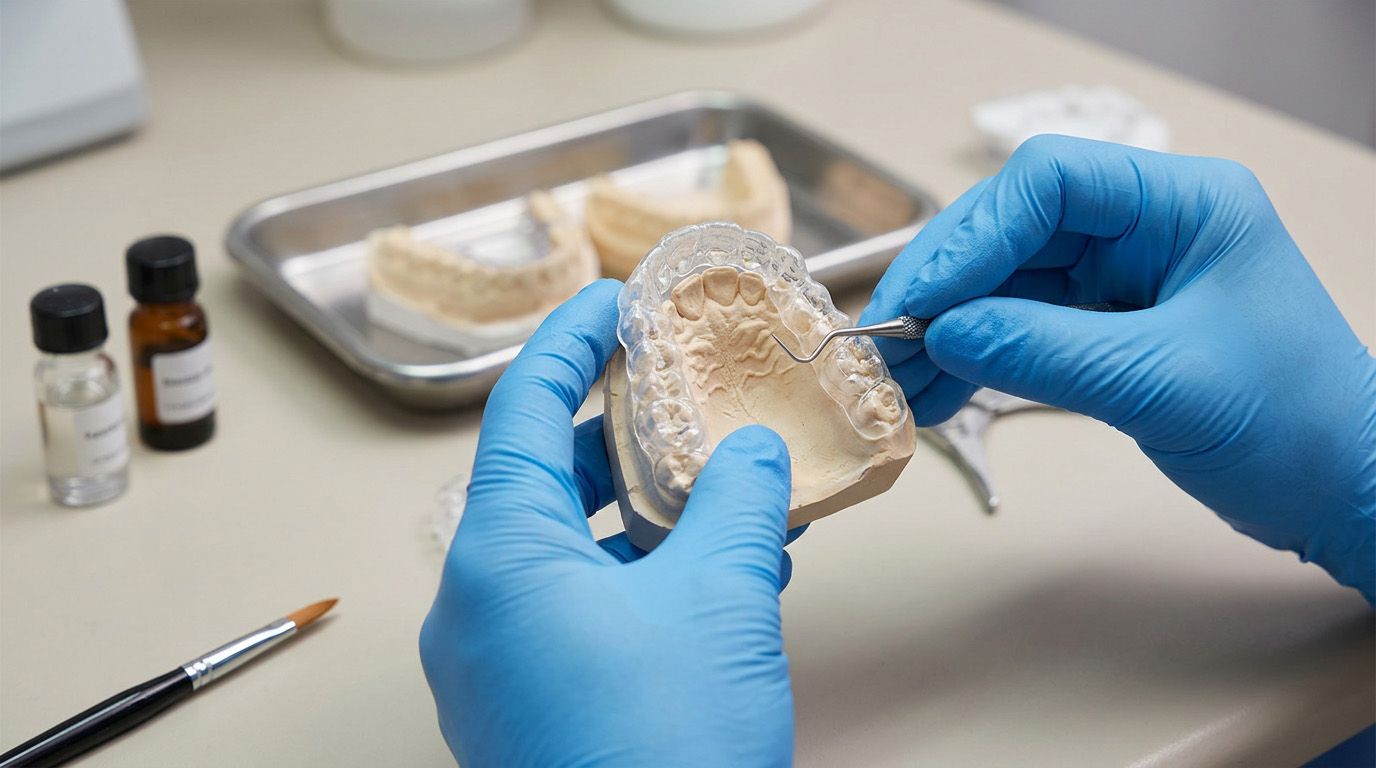
Auxiliary production models
May support denture-processing and digital dental production steps when the intended model use matches the current product documentation.
Application boundary
Use the resin only for a documented purpose
Do not infer clinical suitability from the words “dental” or “water-washable.” Product qualification depends on the exact material, finished part, intended use and applicable regulatory requirements.
- Verify the latest TDS and SDS before production.
- Check whether an IFU applies to the intended workflow.
- Confirm the supported printer and resin profile.
- Separate model applications from intraoral devices.
- Keep lot and process records where traceability is required.
Equipment compatibility
Match the resin, printer and post-processing equipment
A resin name alone cannot confirm compatibility. Review the complete material system before adding the resin to a production workflow.
Printer checks
Confirm that the printing system can use the current material profile and that the resin has been evaluated with the machine’s light source and process controls.
- Printing technology and light-source compatibility
- Current exposure profile from an approved source
- Build platform and resin-vat condition
- Model orientation and support strategy
- Ambient conditions required by the material documents
Preproduction validation
Print a representative test model before routine production. Evaluate the complete workflow rather than judging the resin only by whether the print remains attached to the platform.
- Fine anatomy and edge reproduction
- Support removal and contact marks
- Cleaning access around recessed details
- Surface condition after drying and curing
- Dimensional results under the laboratory’s QC method
Controlled cleaning
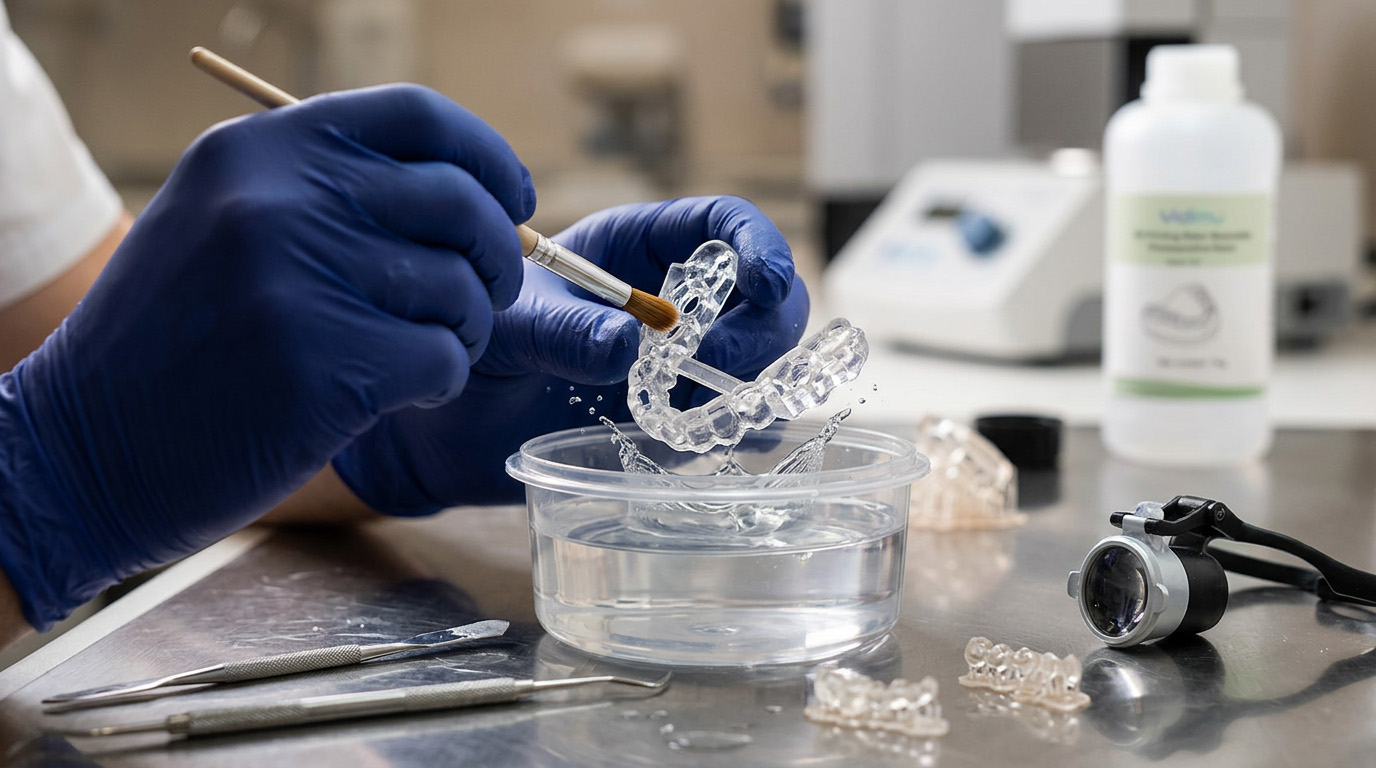
Water cleaning still requires a managed process
Use the cleaning method specified in the current material documentation. Do not use a running household tap or allow contaminated liquid to enter an uncontrolled drain.
Drain excess resin
Allow recoverable material to drain according to the approved shop procedure before washing.
Use a dedicated wash container
Keep cleaning water separate from sinks, food preparation areas and general laboratory water.
Clean recessed surfaces
Follow the TDS when removing residue from margins, sockets, internal geometry and support interfaces.
Inspect before drying
Check for visible liquid resin, glossy residue or trapped contamination before moving to the next stage.
Contain the used water
Label and store resin-contaminated wash water for disposal or treatment under the applicable local rules.
Wash water may contain uncured photopolymer components. Follow the product SDS and the requirements of the local waste authority or licensed waste contractor.
Drying and post-curing
Complete each stage before inspecting the model
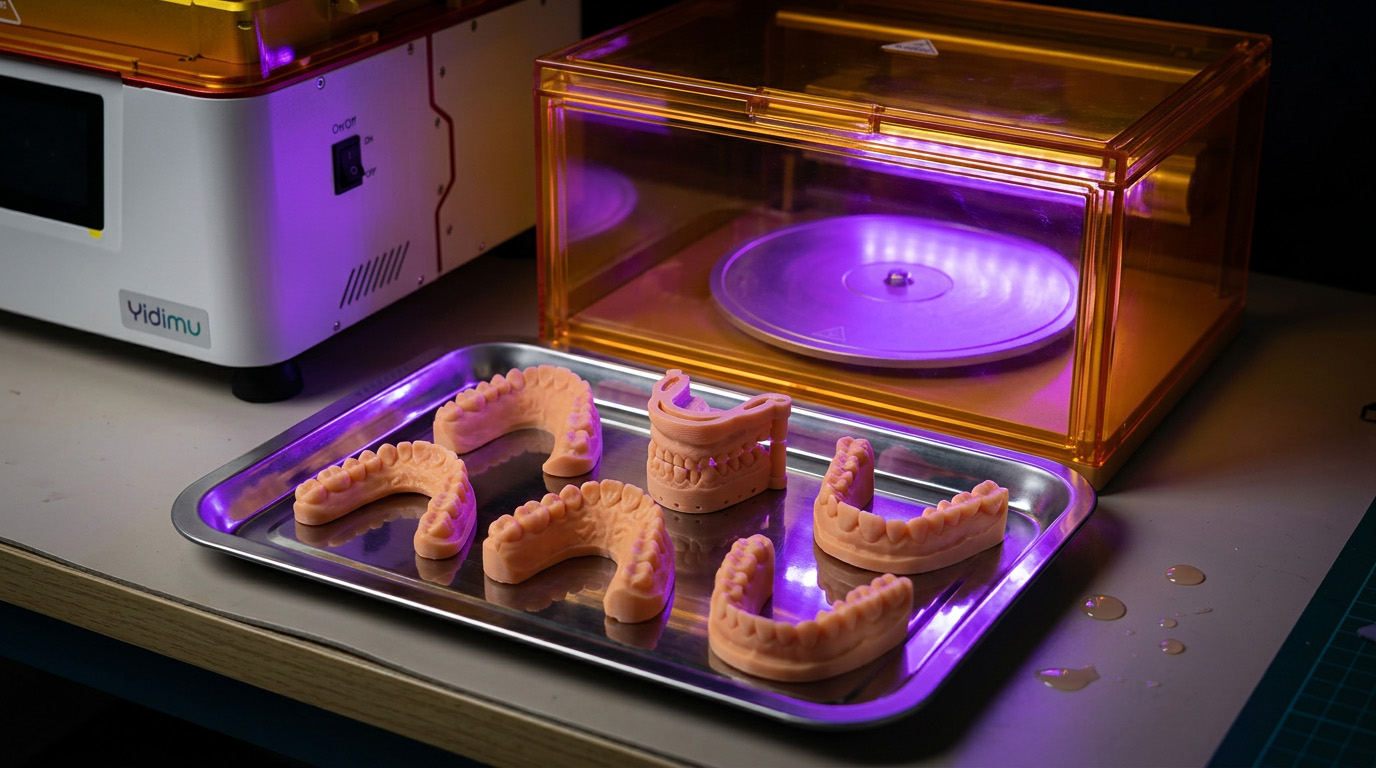
Remove visible cleaning water and allow the model to dry as required by the material instructions. Post-cure the part only with compatible equipment and a validated process.
Model inspection
Check the finished model against laboratory requirements
Inspection should cover the printed geometry and the effect of cleaning, support removal, drying and UV post-curing.
Residual material
Look for tacky areas, glossy contamination, cleaning marks or residue trapped in recessed features.
Edges and anatomy
Inspect margins, tooth anatomy, sockets and other features relevant to the intended model workflow.
Cracks and distortion
Check for fractures, warping, incomplete areas or damage introduced during support removal and handling.
Laboratory QC
Apply the laboratory’s established measurement method and acceptance criteria for the specific model type.
Batch traceability
Record the resin lot, printer, material profile and post-processing route when the quality system requires it.
Accept or reprocess
Do not use a model that falls outside the laboratory’s documented acceptance criteria.
Storage and safety
Control exposure before, during and after printing
Liquid photopolymer resin requires controlled handling even when water is the specified cleaning medium.
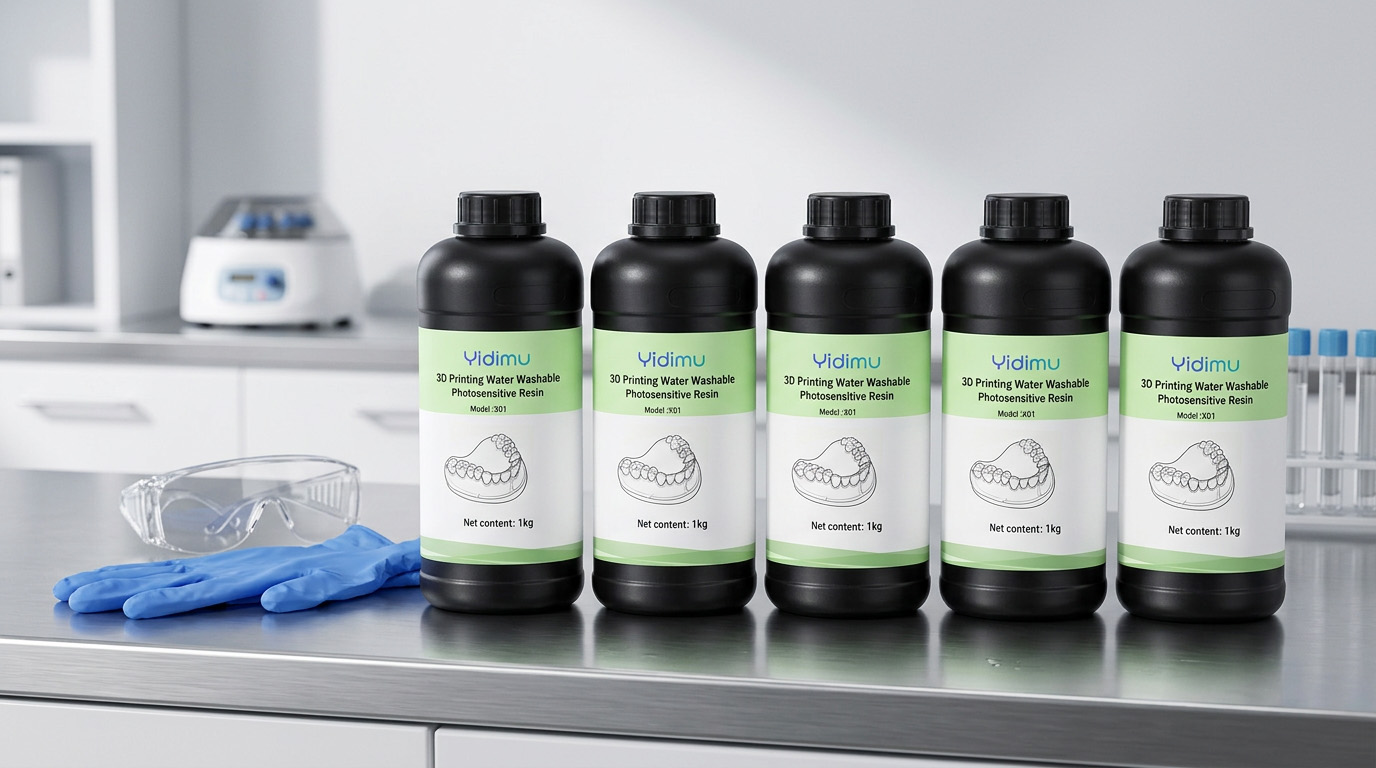
- Keep resin in its original, sealed and correctly labeled container.
- Protect the material from unintended light and incompatible storage conditions.
- Wear suitable gloves and eye protection as directed by the SDS.
- Maintain ventilation appropriate for the resin and working process.
- Keep resin, contaminated tools and wash containers away from food areas.
- Manage spills, empty packaging and uncured waste under the current SDS and local rules.
Product documentation
Confirm the current documents before ordering or validation
Technical values and processing instructions can change by formulation, production batch, printer profile or document revision. Use only the current controlled documents supplied for the exact product.
Frequently asked questions
Water-washable dental resin questions
What does water-washable dental model resin mean?
It means that the product documentation permits water to be used during the cleaning stage for uncured surface residue. It does not mean that the liquid resin is harmless, nonchemical or safe for uncontrolled disposal.
Can used cleaning water be poured into a sink?
Do not assume that it can. Used water may contain uncured resin components. Collect it and follow the product SDS, local wastewater rules and local hazardous or controlled waste requirements.
Can this resin be used for every dental application?
No. A dental model resin must not be treated as a universal material for restorations, surgical guides, splints, temporary teeth or other intraoral devices. Confirm the exact intended use through product-specific documentation.
Is water cleaning the only post-processing step?
No. The workflow may also include draining, controlled cleaning, drying, support removal, UV post-curing and inspection. The correct sequence must follow the current material and equipment instructions.
How long should the model be washed and UV cured?
There is no universal time. Cleaning and curing depend on the resin formulation, printer, model geometry, part thickness, color, equipment and intended workflow. Use the current product-specific instructions.
Which dental 3D printers can use this resin?
Compatibility must be confirmed through the current material documents, printer specifications and validated resin profile. Do not select a material based only on a general wavelength description.
What information should I provide when requesting a resin recommendation?
Provide the printer model, model type, approximate model dimensions, required quantity, current workflow, surface expectations and whether the finished part will have any regulated or intraoral use.
Confirm the resin workflow before production
Send your printer model, dental model type, expected quantity and post-processing setup. Yidimu can review the available material information and provide the current product documents for evaluation.